Showing posts with label Research. Show all posts

Friday, 3 March 2017

Behind the Scenes of Historic & Fantasy Films

After having started filming my coursework, I decided that I would like to have a look in more detail at behind the scenes footage of other films which might fit into the genre of my film.


I firstly started with the television series off BBC called 'The Last Kingdom' which are based off the books by Bernard Cornwell. Although this is set in Anglo-Saxon England during the Vikings invasions the aesthetic of the series is still similar to what I aim to achieve with my own film. I found the set locations very interesting as although the audience are meant to believe that the locations are in fact still in England the show was actually filmed in Hungary. The landscapes seem to be a key feature in the production of the series and I'm hoping that my choice of location for my film will also prove just as effective. Interestingly one of the men who worked on the series stated that the entire plot was about "two worlds clashing" which is similar to the basis of my plot between the Woodland Realm and the world of mortal men in which Sienna's character seems to be caught between.


I also looked at the behind the scenes footage of another historical television series called 'Vikings' which can be found on the History channel. This video was a lot shorter thankfully and I thought the comments on the design - especially hair - was very interesting in regards to the characters. One person mentions that they had to change the style of some of the characters to "freshen it up" in comparison to series one and although my film is not a series I thought this was key to creating different characters that are all unique and nothing alike.


I finally looked at 'Game of Thrones' which is actually in the fantasy genre, although it still a television series. I found Ramin Djawadi's comments on the importance of the soundtrack to be key and I would definitely agree with the choice of soundtrack for the entire series. This made me think more closely about the soundtrack that I plan to use in my own short film and to make sure that it fits to the action and mood of the film. Thankfully I will not be working with any animals on my film - although I found the animal training equally as fascinating - like they have done with the Inuit dogs and ravens in the television show. I did at a time consider having the Woodland Queen or the Guard enter leading a horse as my local stables is only a ten minutes walk from our filming location (and I know a horse who would have been happy to help) but I decided to put the idea aside as it would only complicate the filming and plot of the film. As well as this, I am fully aware of the saying "never work with animals or children" and my entire cast are all teenagers or young adults. Also, looking at the complex fight scenes it also made me grateful that I had taken out the fight scene that I initially put in my storyboard.

Tuesday, 28 February 2017

Editing An Action Sequence


Recently I started editing my coursework although having not finished filming my complete project. I decided to look for editing techniques and came across this video on a channel that I am subscribed to. I thought that the ideas and techniques that he uses in the video were very interesting and have definitely taken them to mind in regards to the editing of my own film.

Tuesday, 24 January 2017

Certificate Rating

Similar to feature films, short films are also rated for specific audiences ranging from a U all the way to 18. I decide to look at different film certificate ratings (according to the British Board of Film Classification) so that I can rate my short film.

U - Universal
U rated films are suitable for all ages and the content of the film is suitable for children aged four and over.

PG - Parental Guidance
PG rated films are suitable for all ages however some scenes may be unsuitable for young children and it therefore normally aimed for children over the age eight years old. The film may also contain mild language, sex/drug references or contain mild violence as long as it matches the context such a fantasy violence which the children will know is not real.

12 and 12A
12 and 12A rated films are considered unsuitable for young children under the age of twelve and 12A films are considered ok for children as long as they are accompanied by an adult. 12 and 12A rates films may contain mild mature themes, discrimination, soft drug use, infrequent strong language, moderate violence, sex references and nudity.

15 - Only suitable for 15 years or older
15 rated films are only suitable for people who are fifteen or older. Films that are rated like this may contain adult themes, hard drugs, regular use of foul language and limited use of strong language, strong violence and sex references and mild nudity.

18 - Only suitable for 18 years or older
18 rated films are only suitable for adults meaning that there are almost no limitations for the content in the film and may contains strong violence, sex references, strong language etc.

Once I had looked at these ratings I decided that my short film would probably be rated as a 15 due to the violence in the film which may disturb some viewers under the age of fifteen.

Tuesday, 10 January 2017

Searching for a Location: An Unexpected Journey

Recently I have been searching for locations to film my short film. I have received numerous recommendations for sets such as Black Park or Cliveden Forest so I decided to do some research on these areas.

Black Park must be one of the most famous forests in Buckinghamshire having been used for many film productions, especially being near to Pinewood Studios. It consists of 530 acres of heathland, woodland and grassland and would be perfected for my woodland themed short film. The park has been described as one long, continuous film set and has been used for many popular films and television shows such as: Midsomer Murders, Sleep Hollow (1999), Ridley Scott's adaptation of Robin Hood (2011), Black Beauty and all of the Harry Potter films.

Cliveden is also a possibility to use as it reasonably close and I have been round the forests before. Obviously, I am not interested in using the main house nor the temples and gardens as it is not required nor would it fit with the style of my short film. However, a list of famous films and television shows have been filmed there such as Sherlock Holmes (2008), Cinderella (2015) and Mr Selfridge (Season 4, 2016).

Having looked at some of the few that were suggested that were reasonably accessible, I decided to start researching some examples which were famous in films which were still accessible but a little further than what I was hoping to use.

Friday, 23 September 2016

Fantasy Opening Titles


After having taken a look at the film opening to 'The Mortal Instruments', I decided that I really liked the idea of having the title appearing during a scene. I still really like the idea of the title being used as a cut between the action of the chase scene I am planning at the beginning of my film however if I added a scene beneath the title alike to what is used in the opening scene above, it would be more based on moving action such as racing through the trees or something. This is only an idea as I may still stick with the idea I currently have of the title being on a blank screen.


I chose to look at this film opening as it has a narration at the beginning of the opening which is similar to what I have planned for my short film 'Halfbreed'. However, I really want the audio to be very clear - alike to Anthony Hopkins' narration in this clip - as the audio wasn't as clear in my previous short film opening.

Combined with elements of the film opening above, I think elements of these clips will be very useful when editing my short film.

Sunday, 18 September 2016

Fight Scene Filming Examples (Prop Wars)


Having posted earlier on studying fight/action sequences I thought I would look at examples of fight sequences before and after visual effects and the editing had been entirely finished. Although I currently have no intention of placing visual effects in my finished product I thought this video was an excellent example as to how these three filmed their short film as well as showing how editing can make the video seem so much better than during the process of filming it. Again it is obvious that the three actors practiced the choreography of their fight sequences and so I will definitely be having my actors practice beforehand. The use of all the different shots in this short film is also very useful for me to consider during filming or even editing for camera action and closeups.

Studying Fight/Action Sequences

Recently I began storyboarding for my main piece of coursework this year. Having already drafted the script (which will be posted once it is finalised) I decided that I would really like to put a couple of fight scenes in my project. However, I also discovered that I had absolutely no idea on how to shoot a fight sequence yet alone a whole scene.


I firstly watched the video above which really helped me during storyboarding. Although it conflicts with the idea of storyboarding as the director here admits to having not filmed the scene at all. Although I am still unsure of the camera movement during my fight sequence I found this very interesting due to how they filmed and the steps they took during the sequence.


Secondly, I watched another video by Tomorrow's Filmmakers. I wanted to see another example of shooting a fight scene. I like the idea of practicing the choreography of the fight scene which I kind of key which I don't think I had completely processed. Compared to the video above, this has a different take on the filming as well as the point that they actually storyboarded this scene. One thing that I did notice is that both videos mention that you can break the 180 degree rule during a fight scene which I thought was very interesting. Also, I liked the idea of having my actors record their voices and all the noises that are made during the scene after the film is edited - which is something I regret not doing after my short film opening last year when I encountered issues with editing the sound.

Tuesday, 13 September 2016

Flashbacks || Part Two

Recently I have started looking at more flashbacks and decided to actually start looking at different styles of flashback. I am planning for flashbacks to take part regarding one character's past which I am hoping to make key to the storyline.


I decided to first look at a flashback from 'The 100'. Set in Octavia's past before she is discovered, I like the use of the lens flares that seem to emphasise on unrealistic almost dreamlike sense of the whole clip. Although it is only around a minute long it is extremely effective and explains a lot about the character of Octavia.


After that I decided to look into Arwen's vision in the 'Lord of the Rings'. I like how peaceful this seems to be and the soft lighting which shines, streaking out across the screen. As it is similar to the one above I think that it follows a certain stereotype.

Wednesday, 7 September 2016

Filtering (re Pitch Black Heist)


Over the summer I watched the short film 'Pitch Black Heist' starring Michael Fassbender and Liam Cunningham. The film made me realise that the colouring was extremely important to the whole aspect of the film, using a monochrome filter throughout the whole film as well as the black and white themed clothing of the actors adds to the theme of the whole film, especially to the title of the film. Regarding my film, I looked at a couple of different shots from my selected film genre.

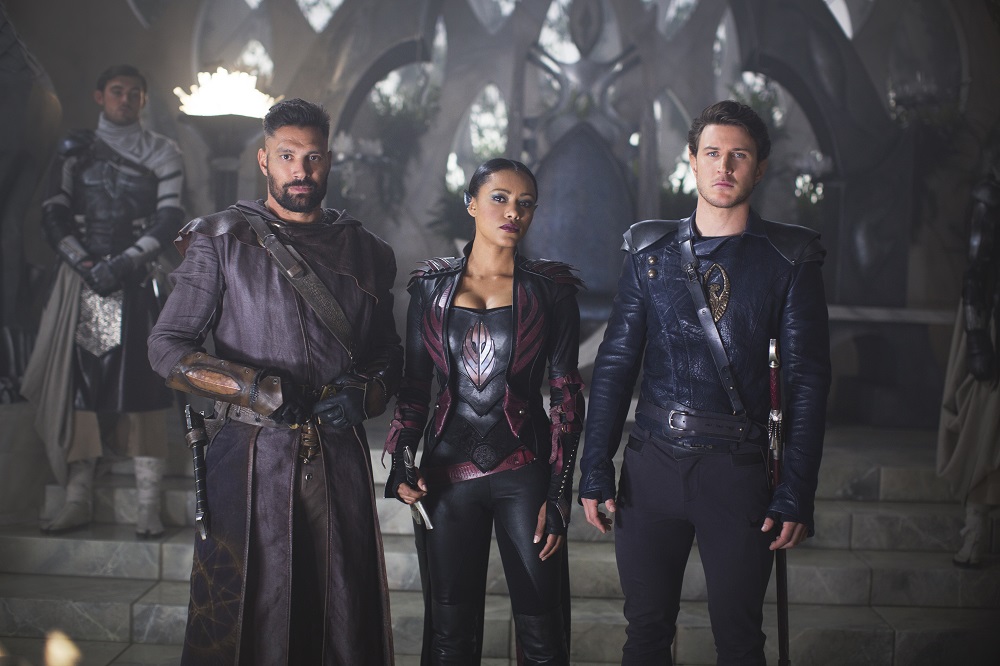
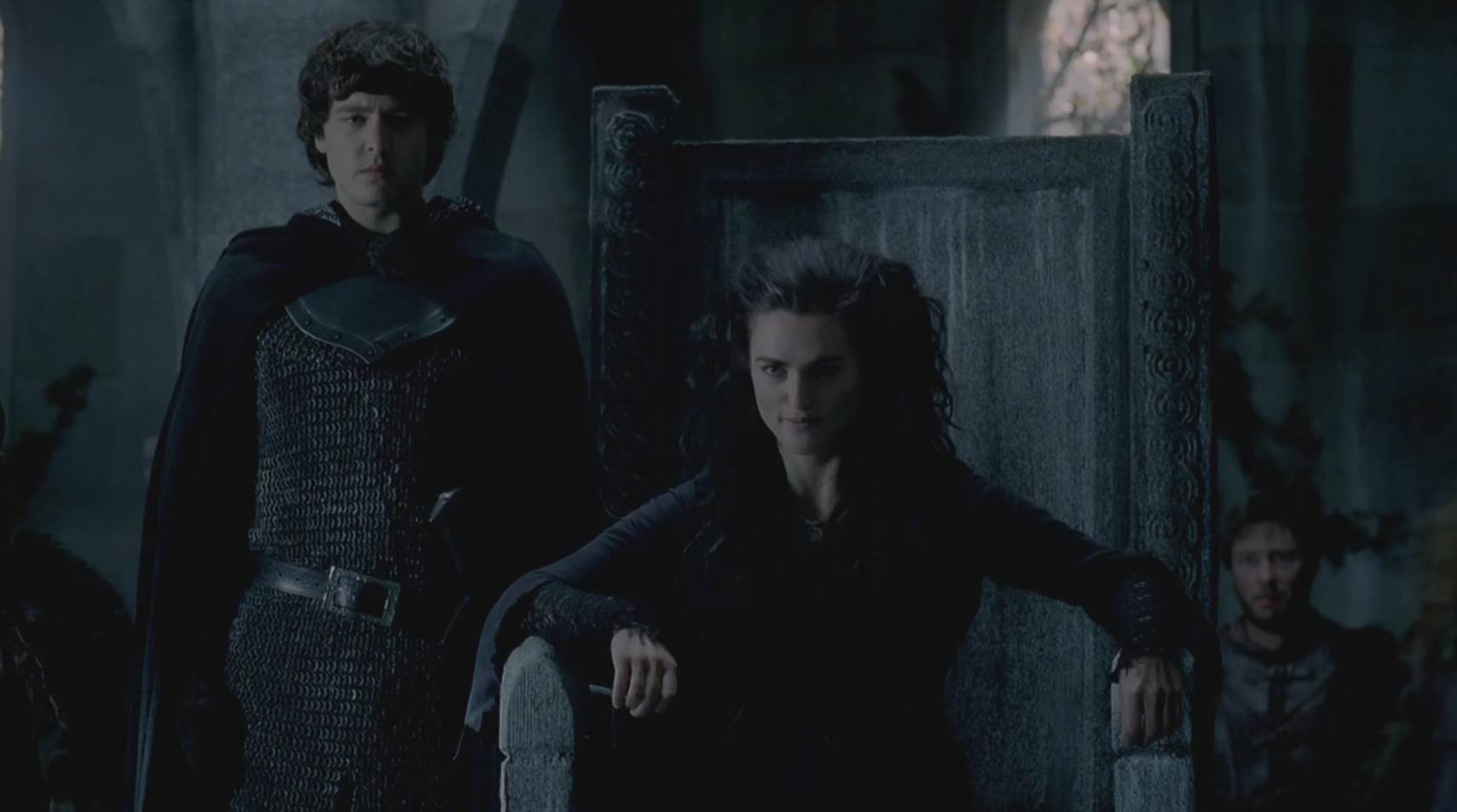
I chose a scene from the 'Shannara Chronicles' and from BBC's 'Merlin'. Both shots seem to have dull themes throughout the clothing choices of the cast for example, Ander (bottom right) is dressed in a deep blue and black sort of uniform whereas Morgana (top on throne) is dressed entirely in black although on close analysis can be seen wearing different shades of green eyeshadow. Filter wise I think my film will have a sepia, dull sort of theme that links with the genre I have chosen however I would also like to bring out the natural elements of light, attempting to make sure that it is not too dark.

Tuesday, 26 July 2016

Storyboarding Process

Having now officially drafted my script (which will be posted once finalised) I have now started storyboarding for my short film. Having done this before for my coursework last year 'Black Sands' I have pretty good idea as to what I am doing. However, I did come across this interesting video which I thought was a lot of use:

Wednesday, 13 July 2016

An Insight Into Nymphs

This idea of the nymphs being part of my short film was not only taken from my love of the elves in Tolkien's novels but also from the Greek Mythology of the nymphs.


Different from the goddesses in Greek Mythology, nymphs are generally regarded as divine spirits who control and shape nature, bound to one particular place. Interestingly the Ancient Greek belief in nymphs survived in many parts of Greece into the early years of the twentieth century. This had a large impact on the development of my story due to the perhaps lingering belief in such stories.

Nymphs are supposedly meant to isolate themselves from human interaction but were known to encounter lone travellers or be seen dancing or bathing in a stream or pool. The nymphs seemingly had mystical abilities with some being known to appear in a whirlwind. An encounter with a nymph for humans was also considered dangerous as it could bring dumbness, besotted infatuation, madness or stroke. Nymphs were also believed to kidnap children which can be seen in other mythology as the job of fairies or pixies.

However, nymphs are most commonly thought of as water spirits. This therefor led me to look into more detail at dryads which are woodland spirits or woodland nymphs. The word "dryad" comes from the word "drys" meaning oak and dryads are specifically associated with being the nymphs of oak trees. The oak is associated as the tree of England and therefor fits in well with my coursework being set in England. They were considered to be very shy creatures, except around the goddess Artemis.

There are very little modern interpretations of dryads in fiction or in filmography aside from their role in 'The Chronicles of Narnia' where they are seen various parts of the story by Lucy Pevensie.

Studying Elven Portrayals - Tolkien


One of the most famous portrayals of elves is in the film adaptations of Tolkien's novels varying from 'The Hobbit" trilogy to the 'Lord of The Rings' trilogy. Therefore, when I started to design the characters of the nymphs, I immediately had a look at the best place to start: Peter Jackson's interpretation. Again some elements which I think I can see in the Woodland Queen have possibly come from the Elvenking, Thranduil. She is bitter and has actually pulled her own people away from the world. I also really like all the different types of concept art and interpretations in the art provided throughout the clip. This hopefully should help me design the nymphs as a species on their own and also help me cast the actresses for the roles.


I think it was very interesting in designing the attitudes of the characters. Although this is part of finding an actor who can get into the personality of the character, I think this is also very important for the basis of character design in the fantasy genre. Another element which I love that I have already mentioned in my blog is the aspect of Thranduil's crown. I like the idea of having the Woodland Queen wearing a crown that highlights her superiority as well as cruel nature. This could possibly take inspiration from two of the most famous crowns/helmets in the interpretations of Tolkien's novels: Sauron's spiky helmet and Thranduil's branch root-like crown.

After having looked at Thranduil and Legolas, I decided to look at the other elf from 'The Hobbit' called Tauriel, who stimulated the love triangle in the film between Legolas, Tauriel and the dwarf, Kili.


I am aiming to follow Tolkien's ideas of developing a race of almost super-human creatures as the nymphs (taking inspiration from Tolkien's elves instead of the small elves and fairies that has become part of children's literature). I believe this might add more a sense of realism to the characters as well as perhaps a creepy element to them as they are more human-like and increasingly more powerful. The interesting ideas of Tolkien towards the Light Elves and Dark Elves will also hopefully be seen in the portrayal of the nymphs in 'Halfbreed', differing between the characters of the Woodland Queen with her bitter and manipulative personality and Melodie with her obedient and perhaps earthy personality. I also took a lot of inspiration from this video extract for the strong female characters and the develop of nature of the nymphs.

Studying Elven Portrayals - Nuada


For inspiration to design the characters of the nymphs in 'Halfbreed' I have been taking a lot of inspiration from the fantasy species of elves.

I firstly looked at the portrayal of Prince Nuada from the film 'Hellboy II: The Golden Army'. I took a lot of inspiration for my cosplay at comic-con this year from the representation of Nuada and hoped that perhaps I could take some from him for my coursework this year as well. Although the only elves met in the short film are female I like the idea of adding a surreal darkness to the Woodland Queen. Alike to Nuada she has a dislike towards humanity and similarly isn't the kindest soul either. I think it would be very interesting to experiment with dark makeup for the Woodland Queen, especially around her eyes and lips.

Sunday, 10 July 2016

Typical Fantasy Synopsis

Stardust
When the dying king of Stormhold throws a ruby into the sky - stating that his successor will be the one who recovers it - the gem hits a star causing them both to fall to Earth. When Tristan sees the star
fall he vows to get it for Victoria who he intends to marry only to find that the star is in fact personified as a woman named Yvaine. Having seen the star fall, three witches search for Yvaine in order to eat her heart to recover their youth. In order to save Yvaine's life, Tristan fights the last remaining witch, Lamia and Yvaine's love for Tristan incinerates Lamia. Tristan is crowned King of Stormhold after discovering his mother is the long-lost princess of Stormhold, Una.

Hellboy: The Golden Army
Prince Nuada went into self-exile after his father destroyed the crown piece that controlled the Golden Army. In the present, Nuada collects the first piece of the crown from an auction in New York, killing everyone at the site by unleashing tooth fairies, and kills his father for the second piece. When his twin sister, Princess Nuala escapes with the final crown piece she hides out at the BPRD
where she meets Agents Hellboy, Liz and Abe Sapien. Nuada tracks down his sister and Nuala hides the final crown piece in one of the Abe's books before Nuada critically wounds Hellboy and kidnaps Nuala, promising her in exchange for the crown piece after realising Abe is in love with Nuala.  The agents travel to Northern Ireland where the Golden Army is situated and Hellboy, having been healed by an Angel of Death, challenges Nuada for the crown as the army awakens who is forced to accept, since Hellboy's father was a Prince of Sheol, the Fallen One, a member of Hell's royal family. Nuala commits suicide to stop her brother due to their mental connection and dies in Abe's arms

The Mortal Instruments: City of Bones
Clary Fray witnesses the death of a man in a nightclub only to discover that no one else can see the murderer. Clary returns home and finds her mother is missing and is attacked by a demon lurking in the house before the murderer, Jace Wayland kills it, revealing that he is a Shadowhunter (half-human half-angel warriors). Learning that the men who took her mother are after the Mortal Cup, Clary meets Shadowhunter siblings Isabelle and Alec Lightwood who help her, Jace and her best friend, Simon hunt down Valentine Morgernstern, a traitor and ex-Shadowhunter. When they meet Magnus Bane in order to restore Clary's memories of the Shadowhunter world, Simon is kidnapped by vampires and the others go after him before being aided by a pack of werewolves. Jace and Clary begin a romantic relationship just before Simon confesses his love for Clary. When the New York Institute falls under attack by demons, Clary and Jace meet Valentine and fight him before he claims that they are both his children leading to Clary pushing Valentine through a portal in the library of the Institute.

The Last Witch Hunter
800 years ago, Kaulder was cursed with eternal life by killing the Queen of the witches. In the present day, he prevents a teenage witch from unintentionally destroying an airplane, working as a witch
hunter for an organization called the Axe and Cross, which aims to keep the truce between humans and witches and either executes or imprisons the witches who break the law. When the priest he works with called Dolan 36 is supposedly killed, Kaulder goes to a witch bar, owned by Chloe and Miranda, to buy a memory spell to help him remember how he died and came back. Chloe eventually agrees to give the spell. During the process of reliving Kaulder's memory, the bar is attacked by Ketola, the witch that cursed 36. He later attacks Chloe at her apartment, though Kaulder saves her. After Miranda is killed by Ketola, Chloe agrees to help Kaulder get what he needs to kill him. Chloe reveals herself to be a dream-walker and frees his mind and the pair escape. They discover that though the Queen's body burned to ash, Kaulder's then Dolan decided to spare her heart in order to save Kaulder from the related pain, meaning that his immortality is tied to the Queen's heart, and if it were to die so would he therefore realising that Ketola's real plan is to revive the Queen. When the Queen escapes into the city after Kaulder kills Ketola, the members of the Witch Council, which is holding the Witches' Prison, are killed and the Queen plans to enact another plague curse using the prisoners as a magical power source. Kuala throws his sword into the Queen, burning her to ash and prepares to kill both the Queen's heart and him; but Chloe dissuades him, promising to stay by his side.


Having looked at all four films I noticed particular elements which seem to reoccur:

- awkward sibling relationships (Jace and Clary, Nuala and Nuada)
- betrayal (Valentine, Nuala/Nuada)
- kidnapping (Simon, Nuala, Yvaine, Una, Dolan 36)

These three elements I plan to be key in my short film: 'Halfbreed'

Monday, 4 July 2016

Nine-Frame Analysis Comparison

When comparing the films 'Honorbound' and 'Ranger' I noticed that begin with an establishing shot that is followed by a narration by the protagonist. The start of both films also use a lot of close-ups and shots that follow the characters on some form of journey. A common element in fantasy films is the notion of going on a quest which was also included in both films. Both films also include mysterious figures such as the dark shaman in 'Honorbound' and the elvish woman dancing in the forest in 'Ranger'.

These results led me to the decision that my film will probably involve a quest or a journey of self-discovery (such as what Ranger goes on in 'Ranger') and that I should use elements of mystery in regards to the characters. I also really like the idea of starting with a narration from the protagonist or an important character.

Sunday, 3 July 2016

Nine-Frame Analysis - Ranger

Watch the film here.

The next short film I looked at was the film 'Ranger' which was inspired by the original story by J.R.R.Tolkien called Beren and Luthien (which can be found in The Silmarillion). As this was inspired by a piece of fiction by one of the most famous fantasy authors I was not let down when examining the content of this fantasy film.

The first shot similarly to the one in 'Honorbound' sets the scene in a hilly and stereotypical mystical, 'far-over-the-misty-mountains' sort of place (likely filmed in the UK or somewhere like New Zealand) whilst at the same time giving the audience a voiceover which introduces the audience to the protagonist named Ranger. The shot of having Ranger in the landscape suggests that the protagonist might be designed to appear as a mystery himself and it makes the audience feel that his character is distanced and perhaps more difficult to identify with.

The second shot introduces us as the audience to the character of the elvish woman who Ranger falls in love with. The camera focusing only on Ranger instead of the elvish woman makes the audience realise that she will play a key role in the film. This is later seen in the third shot when Ranger is shown leaving her to go on a quest in order to obtain her hand in marriage as a challenge set by the elvish woman's father. This wide shot introduces the audience to the disruption in the plot and lets the audience understand not only the elvish woman's regret for having to bid Ranger farewell but we also understand that the quest is important for Ranger so that he can return for her.

In the fourth shot the audience return to being part of the action when Ranger encounters an orc on his quest. The over the shoulder shot prepares the reader for the threatening dialogue between the characters and also establishes the method Ranger will use in order to take the gem from the dragon. The later close up shot (five) of Ranger holding the jewel lets the audience know that the jewel is what Ranger's quest was all about and that it has almost ended. 

The stereotypical characterisation of the damsel in distress can be seen in shot six as Ranger's love interest as the elvish woman waits with her father. The close up again lets the audience understand the emotions of both characters as well as making the audience realise that the father also has hidden antagonistic qualities.

In the seventh shot Ranger returns as the hero after having been shot, followed by a battle between Ranger and the dragon. The close up of Ranger holding the jewel and the angle used makes the audience feel as though they are watching that action alongside Ranger's love interest which is later changed to Ranger's point of view as seen in the eighth shot when the camera looks down at the corpse of the dragon.

The ninth shot the audience is shown that all has been successful with Ranger gaining the elvish woman's hand in marriage and being accepted by her father as well as surviving loosing his hand in the battle against the dragon.

Saturday, 2 July 2016

Nine-Frame Analysis - Honorbound

Watch the film here.

I firstly looked at the short film 'Honorbound' which has a Scandinavian and viking theme to the entire plot, including a dark shaman which is very mystical and fits nicely with my chosen genre.

The first shot sets the scene, giving the audience a voiceover from the point of view of the protagonist and narrator. The dark beginning has the audience curious as to what is going on and is also mildly sinister and creepy when the camera finally shows the narrator's face with blank black eyes. The close ups of the the candles suggest an escape from darkness which could hint to the narrator's suffering after the events that follow in his account of the mysterious traveller and the shots of tomes that the narrator is flicking through makes the audience understand that he is searching for something.

The second shot introduces us as the audience to the figure mentioned in the introduction but also to the narrator in their youth. This helps the audience establish who the protagonist is and makes them feel like they are part of the journey with the protagonist. The wide shot of snow and mountains also sets the scene for where the film is set in a Scandinavian inspired country.

The third shot is part of a sequence of multiple shots portraying the protagonist travelling with a cloaked figure which further sets the scene for the film. The figure remains a mystery even though we as the audience are made to realise that he is significant. This also makes the audience become part of the action, travelling with the protagonist and sharing the same feelings towards the cloaked figure.

In the fourth shot we finally see the face of the cloaked figure, although his eyes are still obscured by his hood. This is something of interest for the audience as they - alike to the protagonist - learn about the cloaked figure's past as being part of a fading society of people. The close up shot of the cloaked figure focuses the action as the figure is placed under a spell and the audience is made to wonder how both characters will escape the danger.

In the fifth shot the audience is introduced to the antagonist of the film: a dark shaman who is set on killing the cloaked figure. The close up of the shaman introduces their role as an antagonist and directs the audiences fear towards him as the camera is positioned to face up at the antagonist as though they are smaller and belittled by him.

The sixth shot introduces the antagonist's weapon of choice after the audience have already witnessed his dark magic. The close up of the morningstar (his spiky weapon on a chain) that is dripping with blood emphasises on the impending threat on both the cloaked figure and the narrator. It also isolates the action as to slow down the pace of the fight sequence and seems to drown out everything else as the audience solely focus on what the antagonist will do next.

In the seventh shot the incident with the antagonist has been resolved and the cloaked figure, now freed from the antagonist's control, promises to help cure the narrator. The close up of the figure pledging to come back with a cure for the narrator (who has just saved his life) emphasises on the truth of his words and also makes the reader realise the importance of this moment in the film.

The eighth shot returns to the narrator sitting amongst his tomes in the darkness and surrounded by candles. The use of a ken-burns shot slowly zooming out from the narrator's desk adds to the mystery and slight creepiness to the elderly character with the black eyes as well as emphasising how truly isolated the character is. Until in the ninth shot when the audience are shown the cloaked figure trudging wearily through the snow towards the old cabin where the narrator resides. The shot similarly zooms out which makes the audience aware that all has been resolved and that it is the end of the film when all fades to black.

Friday, 1 July 2016

History of Short Films


Short films predate feature films by over a decade and have ranged from cartoons, music promotions, student films and amateur cinematography. They can last anything from 15 seconds to 45 minutes. The Academy of Motion Picture Arts and Sciences defines a short film as "an original motion picture that has a running time of 40 minutes or less, including all credits".

During the early years of film production, all films were short. This began with the pre 1920s silent era cinematography which was full of short films varying from newsreels to comedy sketches. Feature films began to become increasingly favoured by the major film studious and therefor drove short films into the less favoured and unknown side of film production. This allows filmmakers a greater freedom of expression as they develop their craft. 

Nowadays, few cinemas show any short films other than adverts and trailers - with the exception of some children's films. Short films instead can be found chiefly on television channels and the internet. In the UK, television has been crucial to short films such as the 'Wallace and Gromit' and 'Shaun the Sheep' series which reached enough popularity to qualify for their own films. Whereas, on the internet short films enjoy huge popularity with the infinite range of the internet, especially for short film-makers who can’t afford to distribute their films on DVD. They are also often screened at local, national, or international film festivals and made by independent filmmakers for non profit, either with a low budget or no budget at all. Therefor they are seen to be used by filmmakers to gain experience and/or prove their talent in order to gain funding for future films from private investors, entertainment companies, or film studios.

For many years short films have provided a regular training ground for newcomers to the industry. Many directors have started their road to fame through careers in short films such as Ridley Scott with his short film 'Boy and Bicycle' made in 1965. One of the UK's greatest film practitioners, Humphrey Jennings, worked largely in short film. The UK has a strong tradition of fostering the talent of new filmmakers. The UK is famed for setting up of the London Film School and National Film and Television School and new filmmakers have been in constant training for many years and shorts are the films that usually emerge. However, professional actors and crews still choose to create short films as an alternative form of expression.

DreamWorks Animation and Disney often produce short sequels to include in the DVD release. Also, Warner Brothers often include old animated shorts on the DVDs of classic WB films. In 2010 and 2012 Warner Bros also released new Looney Tunes cartoons before family films.

Short filmmaking is growing in popularity as equipment becomes cheaper. This is because professional cameras are becoming cheaper and free or low costing software is also capable of video editing.